
War is Hell
It's difficult to find the humor in war - not impossible, but difficult.

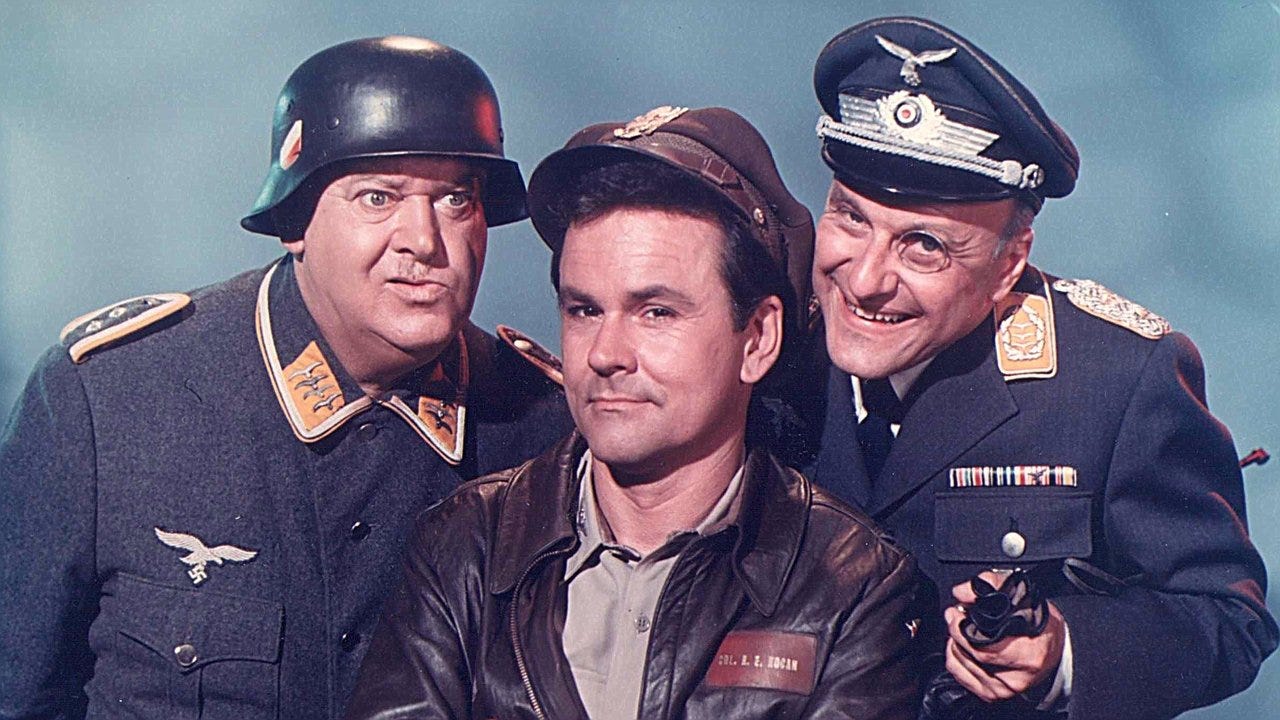
You might consider certain topics to be off-limits when it comes to searching for humor; war, cancer and your wife’s cooking are but three examples of such verboten (note the use of a German word here, which ties in nicely with the column headline art) subjects. And yet. . .
Rule of Three’s mission statement reflects, “My Rule of Three includes: Secure a beverage; don’t be a douchebag; and amuse myself. That third rule drives Rule of Three content decisions each week - perhaps you will be amused as well.”
So you see, our hands are tied. As you may recall, Rule of Three tackled cancer in a column published a couple of years ago. . .
And, I know better than to attempt to make light of my wife’s cooking. So that just leaves war.
Don’t get me wrong; war is unimaginably terrifying. Many films have portrayed the utter violence that accompanies wartime activities, including: Saving Private Ryan, Platoon and Full Metal Jacket.
But when confronted with this senseless attack on humanity, some artists have turned to humor, in an attempt to highlight the absurdity of war. None did this better than Joseph Heller, in his 1961 debut novel, Catch-22. The protagonist in the novel is a U.S. Air Force bombardier during World War II named Captain John Yossarian. I have no idea what “Catch-1” thru “Catch-21” are, but “Catch-22,” as defined by Merriam-Webster, represents “a problematic situation for which the only solution is denied by a circumstance inherent in the problem or by a rule.” Yeah, that sounds like war.
Another well-known attempt at locating humor hidden somewhere deep in the folds of war was the M*A*S*H franchise, initiated by a novel penned by Richard Hooker in 1968, about a U.S. Army medical unit operating during the Korean Conflict (referring to it as a “conflict” rather than a war is a matter of semantics, tied to the loophole surrounding not securing congressional approval to declare a war - it was a war, man!), in the early 1950’s, which spawned a 1970 movie and a long-running sitcom in the 1970’s and early 1980’s. Dedicated readers of Rule of Three know well that I spent way too much time as a youth watching TV sitcoms; as a certified expert, I am qualified to recommend the three greatest M*A*S*H sitcom episodes of all time: “Adam’s Ribs” (the storyline revolves around the main character, “Hawkeye” Pierce, ordering ribs to be delivered to South Korea from Chicago); “Tuttle” (regarding an imaginary character invented by “Hawkeye”); and “A Smattering of Intelligence” (featuring the first appearance of the character, CIA intelligence officer Colonel Flagg). Go watch those episodes right now - we’ll wait. Right? I told you.
The 1960’s sitcom, Hogan’s Heroes (several cast members of which are pictured atop this column), was set in a World War II German prisoner of war (“POW”) camp. The POW’s, led by Colonel Hogan, portrayed by Bob Crane, were depicted as being cunning, intelligent operatives, conducting significant resistance activities from the POW camp. The Germans, including Colonel Klink and Sergeant Schultz, came across as dimwitted yet affable characters, bested every time by Hogan and his crew. Hilarity ensued. Never having spent time in a German POW camp I cannot vouch for the lighthearted tone reflected in the series, but I have to imagine that liberties were taken in the quest to find the humor; the brutality of war was simply ignored by the Hogan’s Heroes production team.
Many filmmakers over the years have attempted to deploy military settings in their comedic offerings. These movies have included: Stripes; Dr. Strangelove or: How I Learned to Stop Worrying and Love the Bomb; The Great Dictator; Operation Petticoat; Tropic Thunder; Kelly’s Heroes (although this movie does include its fair share of slaughter, it’s entertaining and amusing); Good Morning, Vietnam; No Time for Sergeants; Mister Roberts; WarGames (not technically a war movie, but certainly war-adjacent, and quite an enjoyable film); and Private Benjamin.
Meanwhile, back on the sitcom front, other notable series included: F-Troop, set in the Wild West in the post-Civil War era (Forrest Tucker starred); McHale’s Navy (starring Ernest Borgnine); Gomer Pyle: USMC (starring Jim Nabors); Major Dad (starring Gerald McRaney); and C.P.O. Sharkey (starring Don Rickles, best known for hockey pucks, and no, he was not a hockey player or a hockey fan - if you don’t know, then you’re simply too young).
So, sure, you could read Tolstoy’s War and Peace, or Remarque’s All Quiet on the Western Front or Sun Tzu’s The Art of War, but, honestly, those classic books likely wouldn’t satisfy your inner need to adhere to Rule No. 3, would they?
And, honey, what’s for dinner?
War is hell. But, reading Rule of Three is not. In order to avoid hell, simply type your email address below to subscribe - it's free, man! Unless you choose to join Rule of Three in its extremely modest (and, needlessly complicated) effort to make a difference, by supporting the nonprofit organization of your choice (Note: After completing your subscription, please email us at: ruleofthreebs@gmail.com, indicating the name of the organization to which you wish to contribute, and a website address for them).
Thank you for this line:
And, I know better than to attempt to make light of my wife’s cooking. So that just leaves war.
This explains the world.
Amen.
Wow! I've never given any thought to all the comedy war shows we used to watch on TV. War is such a serious topic; perhaps it is a relief to inject some humor into it. The key word is "relief." Laughter is good medicine.
Thanks for writing this, Bill. Excellent article.